 Tavlum
Why preview it first
A herringbone floor adds pattern and movement to a room, but it is one of the more expensive ways to lay wood, and the pattern is very visible. The colour of the wood and the size of the boards change how busy the floor looks next to your furniture.
Seeing a few options on a photo of your own room helps you choose a wood tone and pattern before you order samples.
Tavlum changes only what you describe and is meant to leave the rest of the photo as it was, so the comparison shows the change rather than a different photo.
What we tested
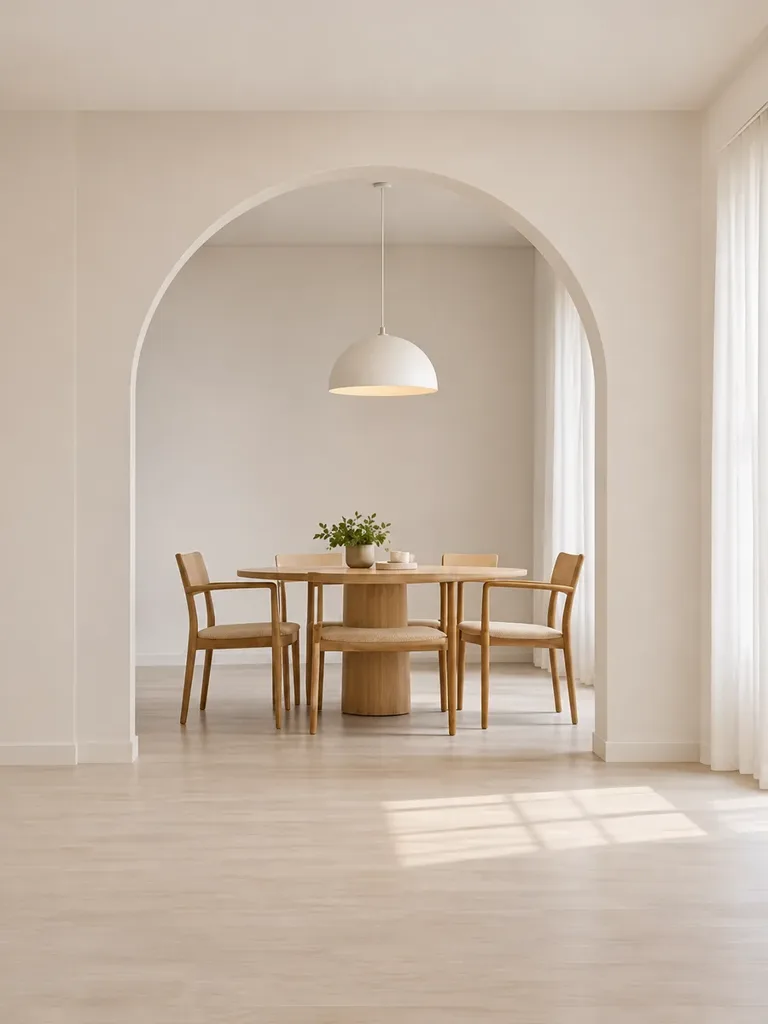
We ran three prompts on a photo of a real room on 27 Nov 2026, using Tavlum's Free Edit with a short text description and no reference image. Each run used 1 credit.
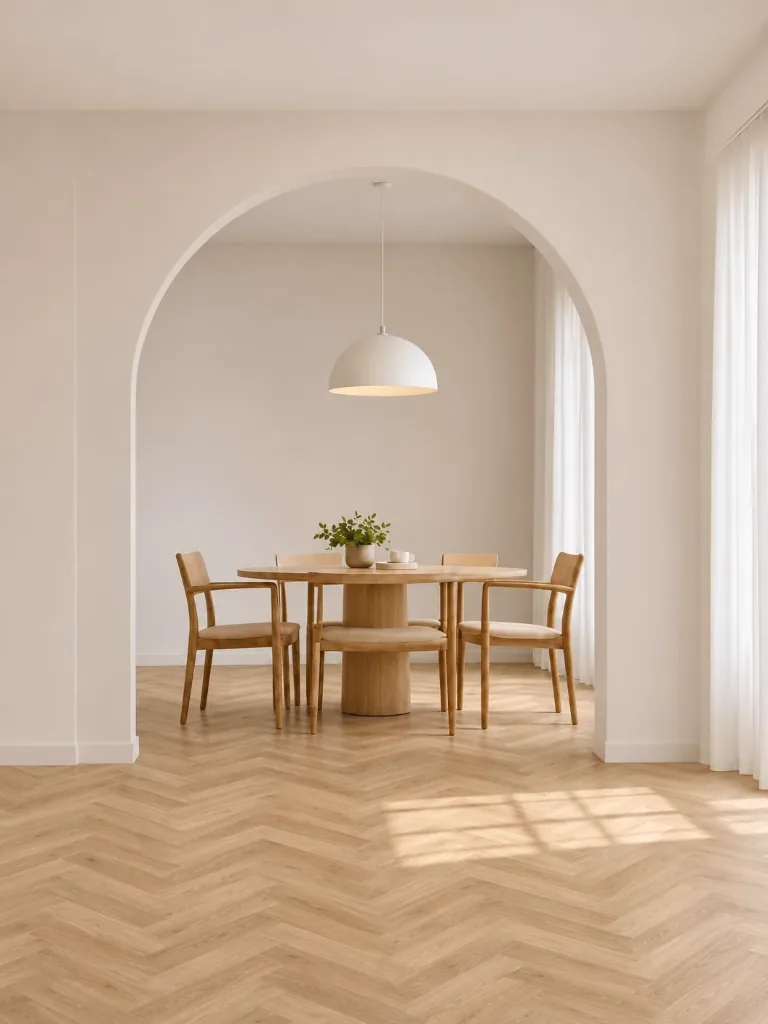
- Light oak herringbone: light natural oak in a herringbone pattern.
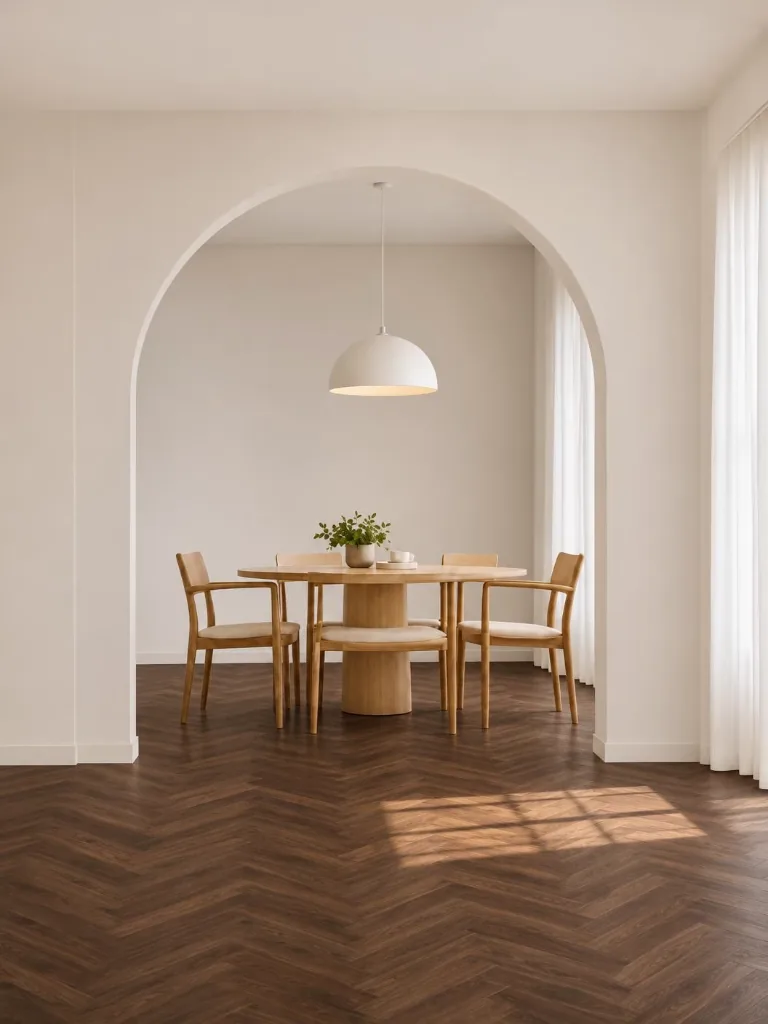
- Walnut herringbone: dark walnut in a herringbone pattern.
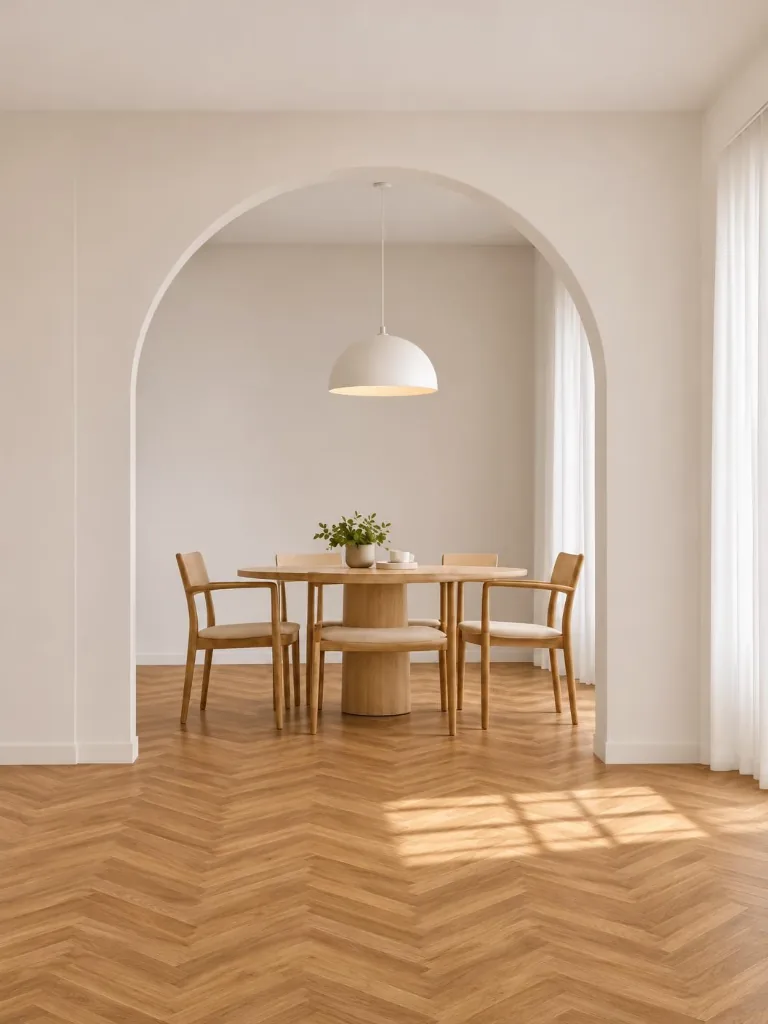
- Honey oak chevron: medium honey oak in a chevron pattern.
In all three results the parts we asked to keep stayed close to the original photo. The walls, arch, table, chairs and lamp kept their shape and position. Light oak kept the room bright, walnut made it feel warmer and more formal, and the chevron looked a little more striking than herringbone. The board lines are drawn by the AI, so their exact size and spacing are an estimate. Each result above sits next to its original photo, so you can compare the details for yourself before trying your own.
How to do it with your own photo
- Take a straight-on photo of the room. Stand back far enough to fit the whole area you want to change, and shoot in daylight with the lights you normally use switched on.
- Describe the change. Name the wood, the colour and the pattern, for example "light natural oak boards laid in a herringbone pattern".
- Say what must stay the same. Naming the furniture, floor, window and walls you want to keep helps the result change only what you asked for.
- Generate and compare. Drag the slider over the result to see exactly what changed. Change one thing at a time so you can see the effect of each choice.
- Narrow it down to real samples. Use your favourite preview to pick two or three real samples, swatches or products to check in the room before you buy.
Getting a realistic result
- Use natural daylight. Strong yellow or blue artificial light shifts how colours look in the result.
- Shoot straight on. A steep angle makes surfaces and patterns look uneven.
- Tidy the area first. Fewer objects in front of what you are changing means cleaner edges.
- Keep reflections low. Glare from windows on shiny surfaces can turn into patches.
- Repeat the run. Two runs with the same description can differ a little, so generate again if one detail looks off.
Planning the change
Start with the biggest surface you want to change, such as the walls, floor or sofa, and keep the rest of the room the same. Once you like that result, save it and use it as the starting point for the next change, so you can build up a whole new look one step at a time.
Keep the light in mind. A room photographed on a bright afternoon looks very different at night, and colours and materials change with it. If you can, take two photos at different times of day and run the same change on both. Then compare the results with real samples, swatches or products in the room before you buy anything.
Herringbone and chevron ideas worth comparing
- Herringbone: Rectangular boards in a zigzag, classic and lively.
- Chevron: Boards cut at an angle so the points line up.
- Light oak: Bright and Scandinavian.
- Walnut: Dark, warm and formal.
- Board size: Wider boards look calmer than narrow ones.
Who this helps
- Homeowners planning new flooring.
- Anyone choosing between herringbone and straight boards.
- Designers showing a client floor options.
- Renovators comparing wood tones.
What a preview can and cannot do
An AI preview redraws part of your photo. It is meant to keep everything else the same, but small details near the change, such as edges, shadows and reflections, can shift a little. It does not measure your room, so it cannot tell you about quantities, sizes or cost. Use it to compare looks and narrow down choices, then check real samples. If a result looks wrong, generate again or change one word in your description; failed generations are refunded automatically.
Check the real thing before you buy
A preview shows the look of the floor in your photo. It does not measure your room, count boards or estimate cost. Order real samples, check them next to your walls and furniture, and ask your supplier for quantities and prices.
AI previews are illustrative and may alter small details. They do not determine size or fit.