 Tavlum
Why frame shape matters on a round face
A round face is about as wide as it is long, with full cheeks, a soft jawline and a short, rounded chin. There are no strong corners for a frame to echo, so the glasses themselves add most of the structure. Frames with straight lines and clear corners, such as rectangles, squares, geometric shapes, browlines and gently lifted cat-eyes, add contrast and can make the face read a little longer. Small, perfectly circular rims tend to repeat the curves that are already there.
These are rules of thumb, not laws. Rim thickness, colour, the height of the bridge and how wide the frame sits against your cheekbones change the effect as much as the outline does. That is why seeing a few shapes on your own face is more useful than reading a face-shape chart.
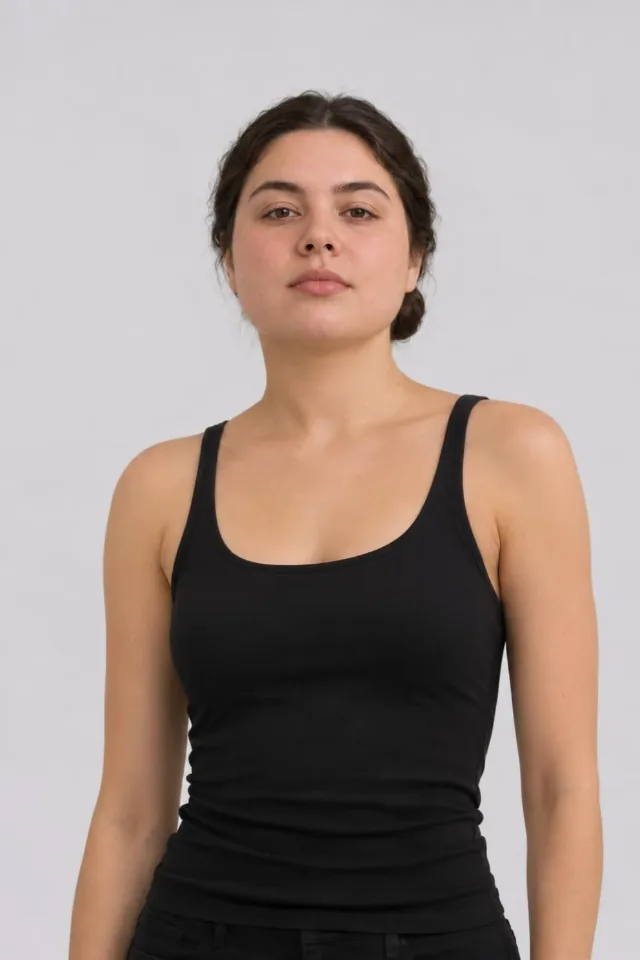
Tavlum draws the glasses onto your photo and is meant to leave your face, skin, expression, hair and background as they were, so the comparison shows the frames rather than a different person.
What we tested
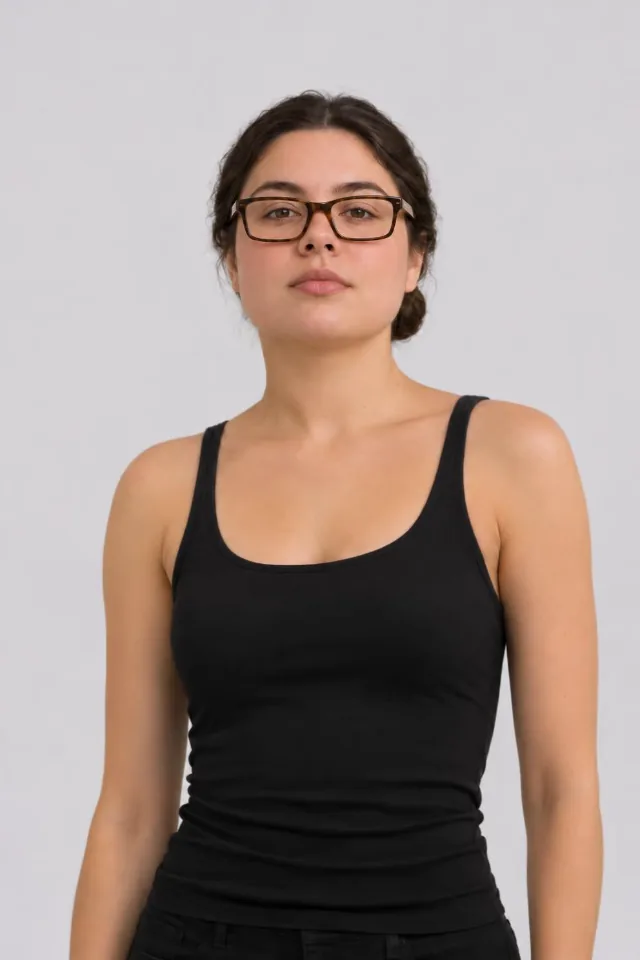
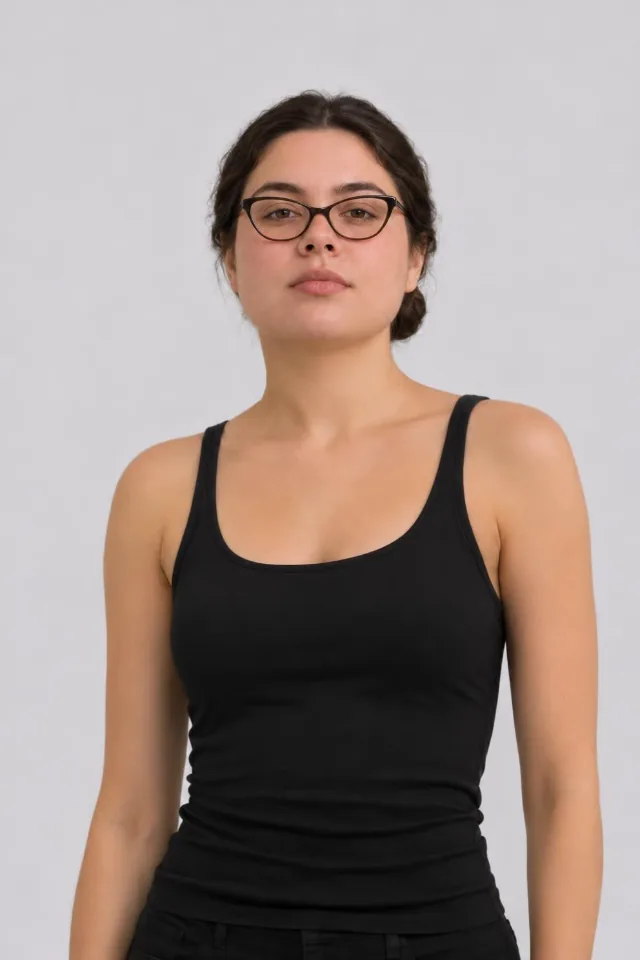
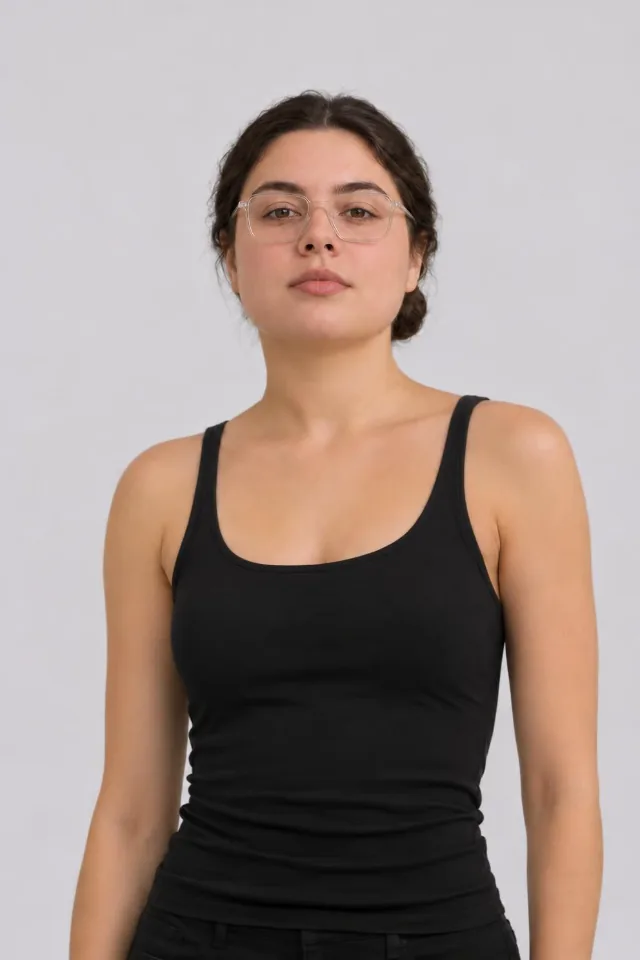
We ran three glasses prompts on the same front-facing round-face portrait on 27 November 2026, using Tavlum's Free Edit with a short text description and no product image. Each run used 1 credit.
- Tortoiseshell rectangle: a structured rectangular acetate frame, slightly wider than the cheekbones.
- Lifted cat-eye: black acetate with gently angled upper corners.
- Clear geometric square: thin, transparent acetate with clear lenses.
In all three results the face, hair, black tank top and grey background stayed close to the original, and the frames sat level across the eyes and on the bridge of the nose. The darker rectangle and cat-eye frames added the most definition across the upper face. The clear frame was the quietest of the three and changed the overall look the least. Look closely at the temple arms and where the frame meets the hair: the AI draws those parts, so their exact thickness is an estimate.
How to try on glasses with your own photo
- Take a level, front-facing photo. Hold the camera at eye height, in soft and even light, and look straight ahead. A tilted chin changes how the frame appears to sit on your nose.
- Take off the glasses you are wearing. Old rims and lens reflections can confuse where the new frame goes.
- Describe the frame, or add a product photo. Say the shape, the material and the colour, for example "thin gold rectangular metal frames". If you are comparing a pair from an online shop, add a straight-on product photo on a plain background instead of a description.
- Generate and compare. Drag the slider over the result to see exactly what changed. Change one detail at a time, such as the colour or the rim thickness, so you can see what each choice does.
- Line up your favourites. Keep three or four results from your history side by side and pick the shapes worth ordering or trying in a shop.
Getting a realistic result
- Keep your eyes, eyebrows and the bridge of your nose clear. Pull hair away from the face so the frame has a clean place to sit.
- Avoid heavy shadows and backlight. Even light makes lens edges and thin metal rims easier to read.
- Use a plain background. Thin and clear frames stay crisp against a simple wall but can blur into busy patterns.
- Look straight at the camera. A strong side angle makes the two lenses uneven and the result less useful.
- Check the lenses. If you wear a strong prescription, real lenses may look thicker or change the size of your eyes in ways a preview does not show.
Frame shapes worth comparing on a round face
- Rectangle and square: the most common choice for adding structure. Try a medium-thick acetate first, then a thinner metal version.
- Geometric: hexagonal and octagonal frames add corners without looking severe, especially in thin metal.
- Browline: a heavier top bar draws the eye upward and adds width across the brow.
- Cat-eye: a modest upward lift at the outer corners adds shape. Very dramatic wings can look heavy on a small face.
- Clear and light colours: good if you want a subtle change. They add less structure than dark frames, which can be exactly what you want.
Width matters too. A frame that is about as wide as the widest part of your face usually looks balanced. Frames much narrower than your cheekbones can make the face look wider.
Who this helps
- People buying prescription glasses online who want to narrow down shapes before ordering.
- Anyone choosing sunglasses who wants to compare a few outlines quickly.
- Shoppers comparing colours of the same frame, such as tortoiseshell, black and clear.
- Opticians and eyewear sellers who want to show a customer a few options on their own photo.
Always check the measurements separately
An AI preview shows style, shape and colour. It does not measure your face, and it cannot tell you whether a frame will fit. The three numbers printed inside most frames, for example 52-18-140, are the lens width, the bridge width and the temple length in millimetres. Compare them with a pair that already fits you, and check your pupillary distance (PD) with your optician or prescription before ordering lenses.
Frames that look right in a preview can still slide down your nose, press on your temples or sit too close to your eyelashes in real life. If you can, try the shortlisted shapes on in a shop, or choose a retailer with a home try-on or easy return policy.
AI previews are illustrative and may alter small details. They do not determine size or fit.